
Female Fashion TipsStyle Guide
Mehndi Designs: Beautiful Henna Patterns for Hands & Feet
Mehndi is a centuries-old art of decorating the hands and feet with henna paste, worn for weddings, Eid and celebrations across South Asia, the Middle East and North Africa. This guide walks through the main design styles — from bold Arabic trails to dense bridal work — plus how to choose a design for each occasion, how to care for your stain, and how to help it turn a rich, deep colour.
The short answer — what mehndi is
Mehndi is henna paste applied to the skin, where it leaves a reddish-brown stain. The main style families are Arabic, Indian bridal, Pakistani, Moroccan, minimal, floral, peacock and mandala designs, each with its own look and traditional use. A stain usually lasts from a few days to about two weeks, deepening over the first 24 to 48 hours and then fading gradually. The sections below cover each style, designs by occasion, placement, tips for a darker stain, and aftercare.
What Is Mehndi?
Mehndi is the art of decorating the skin with henna paste, and the henna paste itself. The word comes from the Sanskrit word mendhika, the name of the henna plant. The stain it leaves is temporary, fading as the skin naturally sheds.
Mehndi is made from a paste of the dried, powdered leaves of the henna plant (Lawsonia inermis) mixed with water and a little oil or lemon juice. As the paste dries and sits on the skin, a natural dye in the leaves stains the top layers of skin a reddish-brown colour.
People have worn mehndi for centuries across South Asia, the Middle East and North Africa, most famously as part of wedding celebrations, where the bride’s hands and feet are decorated in elaborate patterns. It is also worn for Eid, Diwali, engagements, baby showers and other joyful occasions, and today many people also wear it simply as a temporary form of body art.
Mehndi is applied with a cone or a fine applicator, a little like piping icing onto a cake. The artist draws the pattern freehand or follows a stencil, then the paste is left to dry and stain the skin before being scraped away.
Mehndi Design Styles
Every mehndi design belongs to one of a handful of style families. Knowing the families makes it much easier to describe what you want to an artist — or to pick a design from a catalogue — because each one has a distinct look, level of coverage and traditional setting.
1. Arabic Mehndi
Bold trails with open skin

Arabic mehndi is known for bold, sweeping floral trails that flow diagonally across the hand, with leaves, vines and rosebuds drawn in thick, confident lines and plenty of bare skin showing between motifs. The open, airy feel makes it a popular choice for parties and Eid, when you want a striking design without full coverage. It is usually worn on one or two hands, often on the back of the hand, and pairs well with rings and bracelets because the open spaces let jewellery show.
2. Indian Bridal Mehndi
Dense, full-hand bridal work
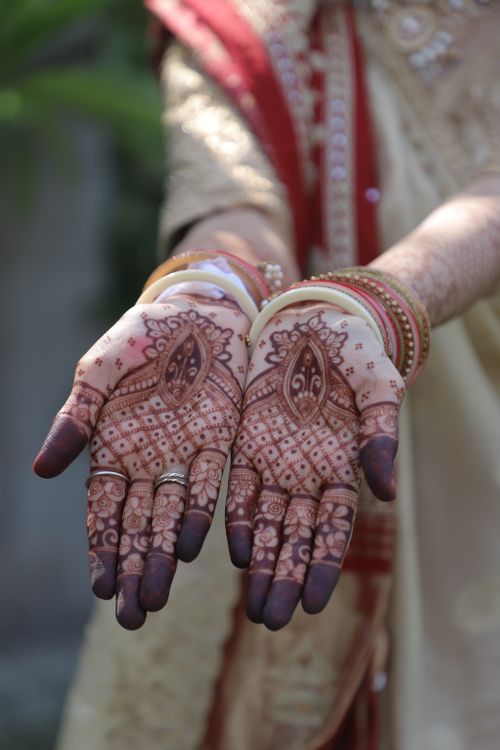
Indian bridal mehndi is the most elaborate style, with dense coverage from the fingertips up the arms, and often down the legs to the knees. Fine paisleys, peacocks, bride-and-groom figures, dulhan motifs, elephants and wedding scenes are woven together with lace-like fill work, leaving almost no bare skin. It is traditionally applied a day or two before the wedding, often during a mehndi ceremony with family and friends, and the depth of the stain is seen as a happy sign for the marriage.
3. Pakistani Mehndi
Fine detail and lace-like fill
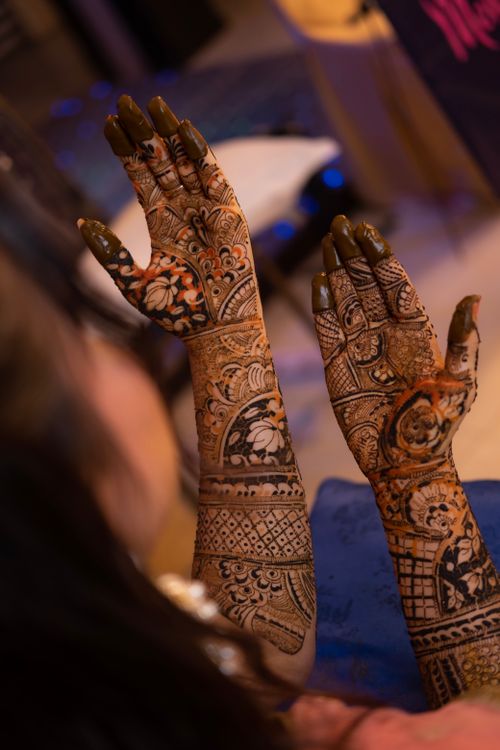
Pakistani mehndi is known for fine, detailed line work and lace-like fill patterns that cover the hands and arms in delicate, jewellery-like designs. Paisleys, florals and geometric borders are layered with tiny dots and shading, and the finished look often resembles lace gloves. It is a popular choice for brides and for formal celebrations, and is often paired with gold jewellery and embroidered outfits in styling.
4. Moroccan Mehndi
Geometric and tribal patterns

Moroccan mehndi draws on geometric and tribal patterns: bold lines, diamonds, triangles, zigzags and symmetrical blocks, often arranged in strong, graphic bands across the hands and feet. Unlike the floral styles of South Asia, Moroccan designs favour shape and symmetry over curves. They are traditionally worn for weddings and celebrations across North Africa, and their bold, graphic look also suits anyone who prefers a modern, statement style.
5. Minimal / Simple Mehndi
Quick, everyday designs

Minimal mehndi keeps things light: a single finger trail, a small mandala on the palm, a slim wrist band, a few dots or a tiny flower on the back of the hand. These designs take minutes rather than hours, need little drying time, and suit everyday wear, office parties and anyone trying mehndi for the first time. They are also a good choice for children and for guests who want a small, pretty design at a celebration.
6. Floral Mehndi
Roses, lotus and jasmine
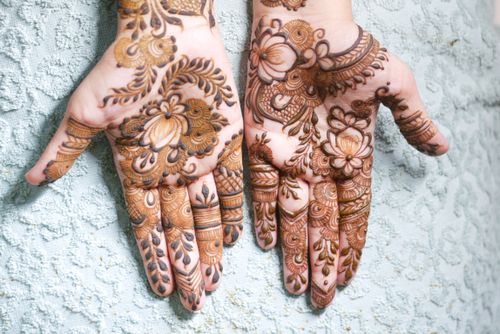
Floral mehndi builds the whole design around flowers: roses, lotus, jasmine and marigold motifs, often linked by curling vines and leaves. It is one of the most versatile styles, working as a full-hand bridal pattern, a single trailing vine on the back of the hand, or a small bouquet on the wrist. Floral designs are especially popular for engagements and parties, where a soft, romantic look fits the occasion.
7. Peacock Mehndi
Feathers and fans as the centrepiece

Peacock mehndi places the peacock — its fanned tail, curved neck and teardrop feather eyes — at the centre of the design, with the rest of the pattern flowing outward from it. The peacock is a traditional symbol of beauty and celebration in South Asian art, which is why it appears so often in bridal and festival mehndi. A peacock motif works well as a large palm centrepiece or as a trailing design down the forearm.
8. Mandala Mehndi
Circular palm designs
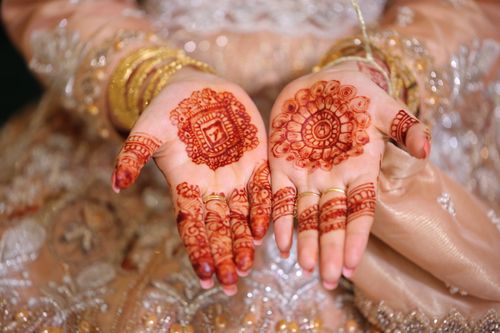
Mandala mehndi centres on a circular mandala drawn on the palm, built from concentric rings of petals, dots and fine lines, sometimes with trails running down the fingers or wrist. Because the design starts from one central circle, it is often recommended as a starting point for beginners learning to draw mehndi. Mandala designs suit casual wear, festivals and parties, and look equally good in a simple one-circle version or a fuller, denser pattern.
Photos: Pexels
Mehndi Designs by Occasion
The occasion decides how much coverage makes sense. A bride wants full, dense work that photographs beautifully; a party guest usually wants something pretty that dries in under an hour. Use this table as a starting point when you talk to your artist.
| Occasion | Typical coverage | Popular motifs | Time it usually takes |
|---|---|---|---|
| Bridal | Full hands and arms, often feet and legs too | Paisleys, peacocks, dulhan motifs, bride-and-groom figures | 2-4 hours (hands only); longer with arms and feet |
| Eid / festivals | One or both hands, sometimes feet | Arabic trails, florals, mandalas, geometric bands | 30-90 minutes |
| Engagement | Both hands, back-of-hand focus | Floral vines, mandalas, peacock motifs | 1-2 hours |
| Party / casual | Back of one hand, wrist or fingers | Minimal trails, small mandalas, single flowers | 15-45 minutes |
| Baby shower | Hands and forearms | Soft florals, paisleys, hearts and playful motifs | 30-60 minutes |
Times are typical ranges, not exact figures — they depend on the artist, the detail of the design, and how much skin is covered.
Placement Guide: Hands, Feet and Arms
Where you place a design changes how it looks, how long it takes to dry, and how long the stain lasts. In general, thicker skin holds colour longer, and larger covered areas take longer to dry.
Full hand (palm and back)
The palm stains darkest because the skin is thickest, so full-hand designs give the deepest colour. They also take the longest to dry and need the most care — keep the hands still, avoid touching anything, and allow extra drying time before moving.
Back of the hand
Back-of-hand designs are the most visible and the quickest to show off, and they dry a little faster than palms because less paste is used. The stain is usually a shade lighter than on the palm, since the skin is thinner.
Feet
Feet stain well, especially the tops of the feet, and they are a traditional part of bridal mehndi. Foot designs need patience: you will need to sit with your feet up while the paste dries, and avoid shoes or socks until the paste is fully removed.
Arms
Arm designs extend a hand pattern up the forearm or, for brides, to the elbow and beyond. They dry in sections, so an artist usually works from the hand upward, letting each part set before moving on. The more skin covered, the longer the whole design takes to dry, so plan to keep your arms still for a while.
Whatever the placement, let the paste dry fully before you move or get dressed, and avoid brushing the design against fabric or other skin while it is still wet.
How to Make Mehndi Darker
These are traditional tips passed down through generations of mehndi artists. They can help you get a deeper stain, but no tip can guarantee a particular shade — your final colour also depends on your skin and the quality of the henna.
-
Step 1: Leave the paste on for 4-6 hours or overnight
The longer the paste stays in contact with your skin, the deeper the stain tends to be. Plan your design early in the day, or before bed, so you can leave the paste on for 4 to 6 hours, or overnight if that is comfortable. Cover the dried design loosely with tissue or a soft cloth if you need to sleep in it.
-
Step 2: Let the paste dry fully before touching it
Do not touch, smudge or pick at the paste while it is wet. Sit still, keep the area away from fabric, and let the paste harden on its own. A fully dry design flakes off cleanly and leaves a stronger stain.
-
Step 3: Use a lemon-sugar seal (optional)
A traditional step is to dab a little lemon juice mixed with sugar over the dried paste with a cotton ball. The sticky seal helps the paste cling to the skin for longer. Use it lightly — the paste should feel tacky, not wet — and skip it if lemon irritates your skin.
-
Step 4: Avoid water right after removing the paste
Scrape the dried paste off rather than washing it off, and avoid water on the area for the first few hours. Water can lighten a developing stain, so delay handwashing, showers and dishes where you can.
-
Step 5: Keep your hands warm
Warmth is traditionally believed to help the stain develop, which is why brides are often told to keep their hands warm and covered after the paste comes off. A warm room, a soft wrap or simply keeping your hands tucked under a blanket are all easy ways to follow this tip.
Aftercare and How Long Mehndi Lasts
Your mehndi stain will keep developing for 24 to 48 hours after the paste is removed, shifting from pale orange to a deeper reddish-brown. Treat the first day as part of the process: avoid water, soap and scrubbing, and let the colour settle.
- Moisturise with a natural oil: dab a little coconut, olive or mustard oil over the design once the paste is off, and repeat daily. Oil keeps the skin supple and helps the stain look rich while it lasts.
- Avoid exfoliating or scrubbing the area: the stain sits in the top layers of skin, and anything that removes skin removes colour. Go gently when you wash, and skip scrubs and exfoliating gloves on the design.
- Wear gloves for washing up or cleaning: if you need to protect the design in its first day or two, gloves keep soap, water and cleaning products off the stain.
Fading is normal: the stain fades gradually over 1 to 2 weeks as your skin naturally sheds. Palms and soles usually hold colour longest. Once the stain has faded to a faint shadow, it will disappear on its own — there is no need to scrub it away.
Related Guides
- Hairstyles for Short Hair — 25+ cute and easy styles for women.
- Color Analysis: Find Your Best Colors — find the palette that makes you glow.
- Dress for Your Body Type — the complete guide + free body shape calculator.
Frequently Asked Questions
How long does mehndi last?
A mehndi stain usually lasts from a few days to about two weeks, fading gradually as the top layers of skin shed. The palms and soles often hold colour longer than the backs of the hands, because the skin there is thicker. Moisturising with a natural oil and avoiding scrubbing or exfoliating the area can help the stain look its best for longer.
How long should I leave mehndi paste on?
Leave the paste on for at least 4 to 6 hours for a good stain, or overnight if you can. The longer the paste stays in contact with the skin, the deeper the stain tends to be. Let the paste dry fully, then scrape or flake it off rather than washing it off with water.
How can I make my mehndi darker?
The most reliable ways to deepen a mehndi stain are to leave the paste on longer, keep the area warm, and avoid water for the first few hours after removing the paste. Many people also use a traditional lemon-sugar seal, dabbed lightly over the dried paste, to help it stick to the skin longer. Remember that stain depth also depends on your skin and the quality of the henna, so results vary from person to person.
Is mehndi safe for sensitive skin?
Pure henna from the henna plant is generally well tolerated, but it can still irritate some skin, so patch-test first: apply a small amount to your inner arm, wait 24 hours, and check for redness, itching or swelling before a full design. Use body-art-quality henna from a trusted source, and avoid so-called black henna, which often contains added chemicals that can cause strong reactions. If you have a skin condition or are unsure, speak to a dermatologist before applying mehndi.
What is the difference between Arabic and Indian mehndi?
Arabic mehndi uses bold floral trails, leaves and vines with plenty of open skin, so it usually covers less of the hand and takes less time to apply. Indian bridal mehndi is much denser, with fine paisleys, peacocks, dulhan motifs and full-hand coverage from fingertips to elbows. Arabic designs feel airy and modern, while Indian bridal designs feel rich and ceremonial.
How long does bridal mehndi take to apply?
Bridal mehndi usually takes 2 to 4 hours for both hands, and longer if the design also covers the arms and feet. Very detailed full-arm and full-leg bridal work can take most of a day, often with breaks. If you are booking an artist for a wedding, agree the design, the coverage and the timing in advance so the session fits comfortably into your schedule.
Can I apply mehndi on my feet too?
Yes, mehndi is often applied to the feet as well, especially for brides and for Eid and festival celebrations. Foot designs usually mirror the hand designs in a simpler form, and they can be paired with toe rings and anklets for a finished look. Feet need the same aftercare as hands: keep the paste on for several hours, avoid water straight after removal, and let the colour develop over the next day or two.
When does the mehndi colour reach its darkest?
The mehndi colour reaches its darkest about 24 to 48 hours after the paste is removed. Freshly removed mehndi often looks pale orange, then deepens to a reddish-brown as the stain oxidises and develops. Avoid judging the final colour in the first few hours, and give the stain a full day or two to settle before a wedding or event.
How do I remove mehndi paste?
Once the paste is fully dry, scrape or flake it off gently with your fingers, a blunt knife edge or the back of a spoon. Avoid washing it off with water straight away, as water can lighten the developing stain. After the paste is off, dab a little natural oil over the design and leave the area alone for a few hours while the colour develops.