Duck Nails: The Flared Y2K Shape Explained (With Styling Tips)
Duck nails are the shape people either love on sight or stare at in confusion. Wide at the free edge, narrow near the cuticle — the silhouette really does look like a duck’s foot, which is exactly where the name comes from. They blew up in the early 2000s, faded out, and then came roaring back with the whole Y2K revival. If your feed is full of them and you are wondering whether they are wearable or just a meme, this guide covers what they are, who they suit, how they are made, and what to ask for at the salon.
Fair warning up front: duck nails are a commitment. They are harder to shape than almond or square, they change how your hands look and feel, and they are not the shape you pick if you type all day. But if you want nails that make people look twice, keep reading.
What Duck Nails Actually Look Like
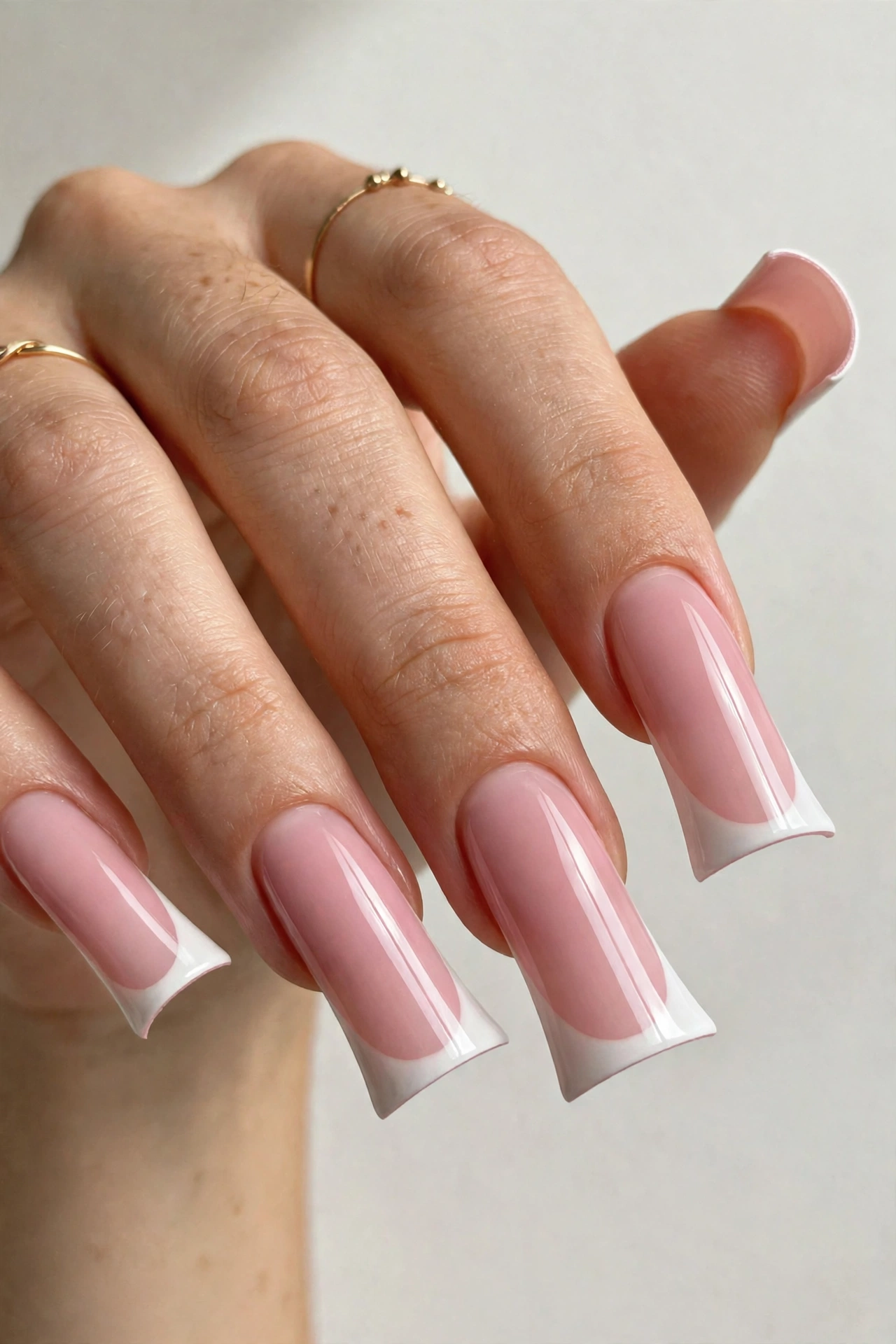
Picture a normal nail tip. Now imagine the sides flaring outward as they leave the nail bed, so the widest point is right at the tip instead of near the cuticle. That is the duck shape. From above, the nail looks like a fan or a duck’s webbed foot. From the side, there is usually a slight upward curve at the tip, though some techs keep it flat.
They are sometimes called flared nails, and you will also hear “duck feet” in salon slang. Same thing. The defining feature is always the flare — without it, you just have wide square nails.
Why They Came Back
Duck nails were everywhere in the early 2000s, especially in hip-hop and R&B culture — long, flared acrylics with airbrushed designs were a status look. Then the pendulum swung toward minimal: short, nude, almond. Everything got quieter for about fifteen years.
The Y2K revival dragged them back. Once low-rise jeans and butterfly clips returned, it was only a matter of time before the nails followed. Social media did the rest — duck nails photograph dramatically, the shape reads instantly even in a small phone screen, and nail artists love them because the wide tip is basically a bigger canvas for art.
Duck Nails vs. Other Wide Shapes
People mix these up, so here is the quick distinction:
| Shape | What makes it different |
|---|---|
| Duck / flared | Widest at the tip, narrow at the base. The flare is deliberate and visible. |
| Square | Straight sides, same width from base to tip. No flare. |
| Coffin / ballerina | Tapers inward toward the tip — the opposite of a duck nail. |
| Wide natural nails | Some people just have wide nail beds. That is anatomy, not a shape choice — though a tech can lean into it or correct it. |
How They Are Made (And Why Your Tech Matters)
Duck nails are almost always acrylic. The flare needs structure that gel polish on a natural nail usually cannot provide, especially at longer lengths. A skilled tech builds the shape with forms or tips, then files the sides so they angle outward evenly — both sides need to match, or the nail looks lopsided.
This is not a beginner shape. Filing a symmetrical flare freehand takes practice, and a tech who has never done duck nails before may give you something that reads more like “uneven square.” If you want them, find a tech whose portfolio already shows flared sets. Ask to see photos before you book.
What Length Works Best
Duck nails need some length for the flare to read properly. Very short duck nails just look like wide squares, which defeats the purpose. The sweet spot is medium to long — enough free edge for the sides to visibly angle outward.
That said, length is also where practicality dies. Long flared tips catch on everything: pockets, hair, keyboards, seatbelts. If this is your first set, start at a medium length and see how you cope for two weeks before going longer.
Designs That Suit the Shape
The wide tip is the whole point of duck nails, so designs that use that extra real estate look best:
French tips are the classic — the wide smile line follows the flare and looks intentional rather than accidental. Airbrush and ombre fade beautifully across the broader surface. 3D art, charms, and rhinestones have more room to sit without crowding. Bold solid colors — especially the Y2K palette of baby pink, lilac, and chrome — let the silhouette do the talking.
What does not work as well: tiny delicate nail art that gets lost on the wide tip, and very dark colors on very long lengths, which can read heavier than intended.
The Honest Downsides
No shape is perfect, and duck nails have real trade-offs. Typing is harder — the wide tips hit neighboring keys. Picking up small objects (coins, earrings, credit cards off a table) takes technique. They are more prone to catching and lifting at the corners because the widest point takes the most impact. And fills need a tech who can maintain the flare as the nail grows out; a bad fill turns duck nails into a shapeless wide mess.
None of this is a dealbreaker if you love the look. It is just worth knowing before you sit in the chair.
How to Ask for Them at the Salon
Walk in with reference photos and use the words “flared” as well as “duck” — some techs know the shape better by one name. Specify your length (short, medium, long, extra-long all change the result), say whether you want the tip flat or slightly curved up, and confirm the tech has done the shape before. If they hesitate or say they can “figure it out,” consider that a sign to find someone else.
Expect to pay standard long-acrylic prices, sometimes slightly more — the shaping takes longer than a basic square set.
Frequently Asked Questions
Are duck nails the same as flared nails?
Yes. “Duck nails,” “flared nails,” and “duck feet” all describe the same shape: narrow at the base, wide at the tip. Different salons and regions just prefer different names.
Do duck nails damage your natural nails?
They carry the same risks as any acrylic set — the damage comes from application and removal, not the shape itself. Go to a tech who does not over-file your natural nail, and never peel or pry acrylics off. Soak off properly and your nails will be fine.
Can you get duck nails on short nails?
Technically yes, but the flare barely reads at short lengths — they end up looking like plain wide squares. Medium length is the practical minimum if you want the actual duck silhouette.
Are duck nails still in style?
They are firmly back thanks to the Y2K revival, and they have a loyal following in nail-art communities. Like any bold trend, they are not for everyone — but they are far from a passing joke. The shape has now survived two full trend cycles.
How long do duck nail sets last?
Same as any acrylic set: two to three weeks before you need a fill. The flare can grow out unevenly, so do not stretch fills past three weeks or the shape starts to look unintentional.
Can I do duck nails at home?
It is one of the harder shapes to DIY. Shaping a symmetrical flare freehand takes practice, and working with acrylic at home has a learning curve. Press-on duck nails exist and are a much easier way to test the look before committing to a salon set.
What nail art looks best on duck nails?
French tips, ombre and airbrush fades, chrome finishes, and 3D charms all suit the wide tip. The extra surface area is the shape’s biggest advantage for art — use it.
Are duck nails practical for everyday life?
Honestly, less practical than almond or short square. Typing, grabbing small objects, and anything fiddly takes adjustment. Most wearers adapt within a week, but if your work is hands-heavy, start with a medium length before going long.
Love experimenting with your look? Read our guide to dressing for your body type so the rest of your outfit keeps up with your nails. For more hands-on beauty guides, learn how to clean makeup brushes without ruining them and how to sew a button that actually stays on. For more ideas, visit the homepage.